Neupulse
Helping people with Tourette’s take control through a breakthrough in wearable neuroscience
The story
Neupulse was founded with a clear mission: to give people with Tourette’s a new way to manage their symptoms and take back control of their daily lives.
Tourette’s syndrome affects hundreds of thousands of people, yet treatment options remain limited. Medication can have unwanted side effects, while access to behavioural therapies is often restricted. For many patients, this leaves a significant gap between need and available care.
Built on research from the University of Nottingham, Neupulse is addressing that gap through a new, non-drug approach.
The company has developed a wearable wristband that gently stimulates the median nerve to help reduce the frequency and severity of tics. By targeting the underlying neurological signals associated with Tourette’s, the device offers a practical and accessible alternative to traditional treatments.
Since spinning out in 2021, the business has progressed from early research into clinical validation and product development. Trials have shown that the device can reduce tic frequency from initial use, with further improvements over time, demonstrating both its potential effectiveness and usability in real-world settings.
As the company moves towards regulatory approval, it is also gaining recognition from the wider healthcare system. A recommendation from the National Institute for Health and Care Excellence (NICE) marks a significant milestone, signalling the potential for digital therapies to play a greater role in treating neurological conditions and opening the door to broader patient access.
With continued investment and development, Neupulse is focused on bringing its device to market and expanding access to patients in the UK and beyond.
At its core, the company is not just developing a new product.
It is redefining how neurological conditions like Tourette’s can be managed, shifting from reactive treatment to empowering individuals with a safe, wearable solution that fits into everyday life.
Why we invested
Neupulse stood out as a business addressing a significant unmet need with a practical, patient-focused solution. Tourette’s affects a large population, yet treatment options remain limited, often relying on medication or therapies that are not widely accessible.
Neupulse’s wearable approach offers a safe, non-drug alternative that fits into everyday life, with early clinical evidence demonstrating meaningful reductions in tic frequency. Combined with strong academic foundations, growing validation from the healthcare system and a clear pathway to regulatory approval, the business shows the potential to bring a new category of digital therapy to market and deliver a tangible impact on patient outcomes.
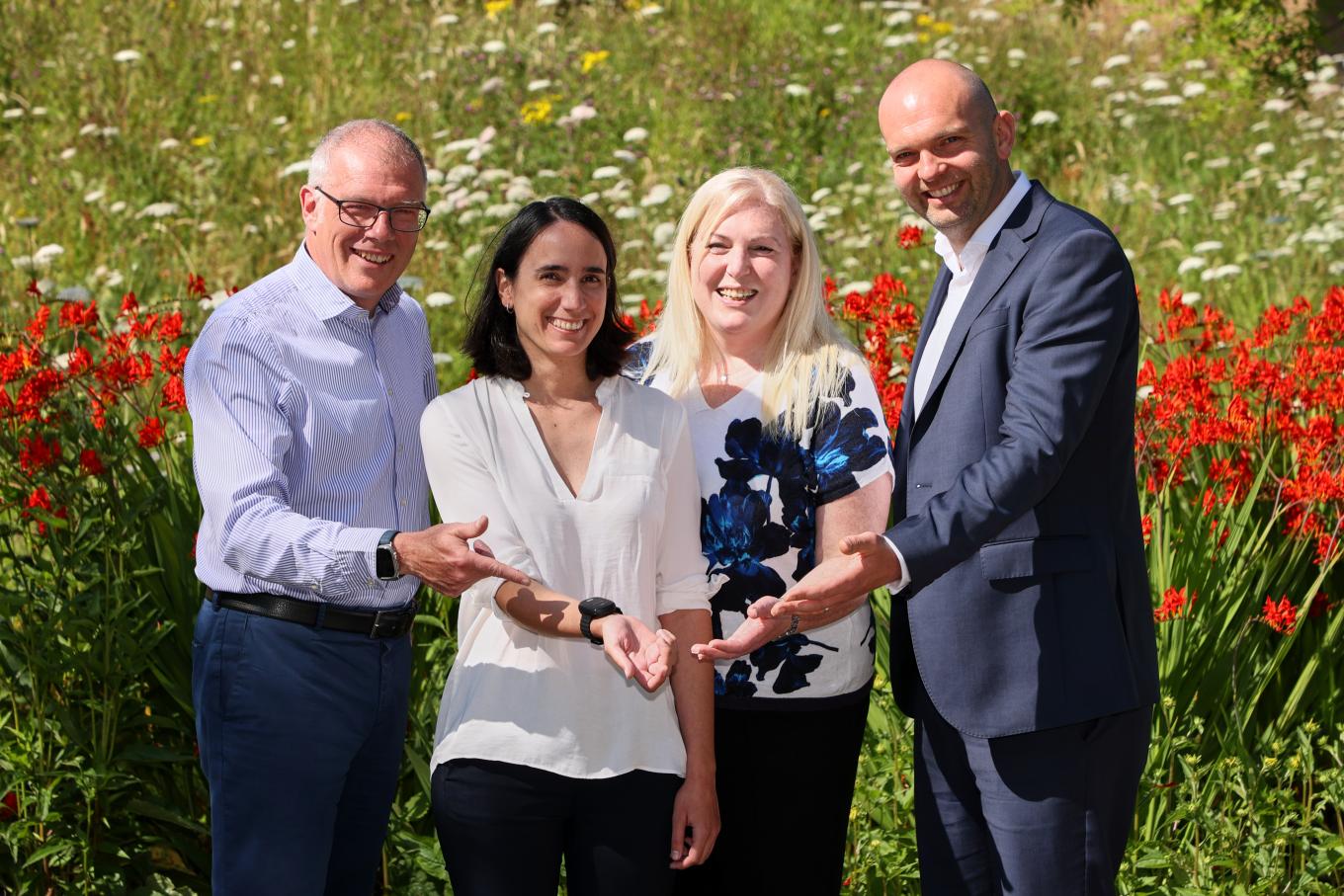
Watch: Founder conversations
Natalie has lived with Tourette’s for over 20 years, navigating the daily challenges that come with it, from managing tics to dealing with how others react.
In this demonstration, she trials the Neupulse device, a wearable designed to gently rebalance brain activity and help reduce tic frequency.
What follows is a powerful, real-world example of the impact: from visible, constant tics to moments of calm and control. While still in development, the device offers a glimpse into what a new approach to managing Tourette’s could mean, not removing it entirely, but giving people the ability to take back control, even for a moment.
Natalie has lived with Tourette’s for 20 years. She accepts it, but it never gets any easier.
I never don’t go and do something because of my Tourette’s, but there’s days when I’m struggling ’cause of everything, and I just can’t really deal with people’s reactions that day. Just to walk through somewhere. Look normal, I guess, would be a nice experience.
There is no cure for Tourette’s, but a revolutionary new treatment could transform Natalie’s life and thousands of others. Five years ago, Natalie began working with scientists at the University of Nottingham to find out how electrical pulses can control ticks.
The first time as part of the trial that I felt that experience, I remember getting quite emotional about it because I suddenly just felt like this emptiness and relaxed state that hadn’t felt well. I couldn’t remember feeling.
Now Natalie is back to try a new wearable device developed by Professor Steven Jackson and his team at Neupulse.
This what the device looks like. You will be stimulating your right wrist and so the device needs to be placed like this on the other side of the wrist. We can start the device by pressing the button. Hold it in for three seconds. How’s it feel? It’s a different sensation the last time, isn’t it?
What Natalie is getting is two minutes of stimulation as a given frequency with a minutes break, followed by another two minutes with a minutes break. So she’s getting intermittent stimulation.
You still is a statue, Natalie. It’s like an instant calmness.
And you haven’t done a single vocal tick since when we started doing it before a tick, there were things happening in the brain.
So we give a series of electrical pulses to the nerve running up to those brain areas that are evolved in generating movements. And what that does is interfere with the occurrence of ticks. It’s essentially to give people, people control back over their ticks so that in situations where you feel you want to control your ticks, you can just press a button and it’s gonna reduce your ticks.
It allowed me to safely go to places, or not just for me, but some people to go and achieve things that they’re too afraid to go and do at the moment. Has it stopped, by the way? Yeah. Yeah, I thought so. What we find from talking to people is that they often don’t want to be cured of their ticks. They think that they’re part of them.
So the idea is to give people back control over their ticks rather than eradicate them completely Keen to put the device to the test.
Natalie heads to a place feared by many who live with Tourette’s, the library. There’s scenarios in my life where I would like to be able to go into places and just blend into the background for a moment in time and get on with what I need to do.
Oh God, I’m gonna destroy this library. I know it. Hello, Can I help you? Yes, I’d like to find some books. I’m teaching. Teaching. Thank you very much. Can’t read s**t books. This is weird. Weird. Weird. Fail. Fail. Hey, watch this. Watch out b*****s. That’s a fail. Everyone’s f*****g looking. Oh, With her takes in full flow.
Natalie turns on the device. I felt I could be quiet.
But with the device still in its development stage, it stops pulsing after two minutes.
Uhoh, It stopped. We need to go Back. B*****s. Hey. Scared you. Can I take this one please? Thank you very much. You’re welcome. Cheers. If one’s f*****g Looking, thank you. Having a device that can cause you Tourette’s is exciting. Um, for the whole Tourette’s community, not just for me.
I’ve had Tourette’s for over 20 years and never had the opportunity to just switch it off and have a break from it. To be able to sit and just have some silence in your own head, in your own body for short periods of time, that is a life changing prospect. I’m excited to test it in in public places, but I’m excited to test it in front of friends and family as well, and literally put it on and say, watch this. Watch what I look like without my ticks. Just watch me.